
Prevention Is the New Anti-Aging: Why Your 30s Are the Best Time to Start
There is a version of the anti-aging conversation that begins too late.
By the time someone is thinking about significant skin correction, years of collagen loss, UV exposure, and cellular stress have already accumulated quietly beneath the surface. The treatments required to address that accumulation are more intensive, more costly, and take longer to show results than they would have if the conversation had started earlier.
This is not a criticism. It is simply how the information has historically been presented. Anti-aging has been framed as something you do reactively, after the signs appear. The better framework is prevention, and the most powerful time to begin is in your 30s.
What is actually happening in your 30s
Collagen production begins to decline in your mid-20s at a rate of roughly one percent per year. By your early 30s that decline is measurable. Skin that recovers quickly from sun exposure, stress, or a run of bad sleep in your 20s starts to take longer to bounce back. Fine lines that used to disappear overnight linger a little longer. The skin is changing at the structural level, not just the surface.
At the same time, the cellular mechanisms that drive skin regeneration, including mitochondrial function, collagen synthesis, and the skin's own repair processes, are still highly responsive. This is what makes your 30s such a strategic window. You are not trying to reverse significant loss. You are maintaining and supporting systems that are still functioning well, which is dramatically more efficient than attempting to rebuild them later.
What prevention actually looks like at HBM
Prevention at Hamptons BioMed is not a light moisturizer and SPF, though both matter. It is a cellular approach to skin health that supports the underlying systems responsible for how your skin ages over time.
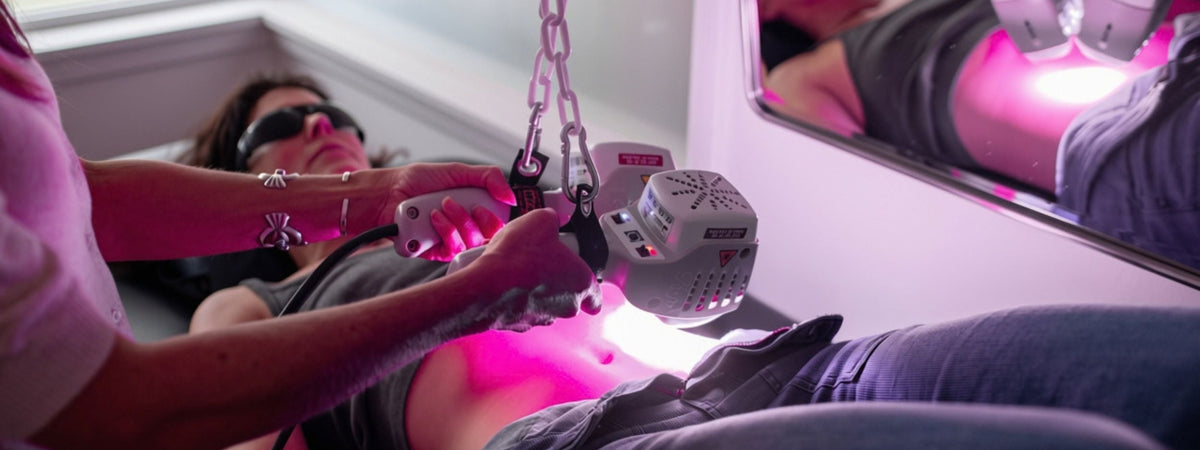
Firefly photon therapy stimulates mitochondrial function and supports cellular energy production in skin tissue. Red light and near-infrared wavelengths support collagen synthesis and reduce inflammation at the cellular level. Our holistic facials use non-toxic skincare that supports the skin barrier and microbiome rather than disrupting them. NeoLyft at lower energy settings builds collagen support and maintains structural integrity before visible laxity develops.
The goal is not to look like you have had work done. It is to support your skin's own regenerative capacity so that it functions optimally for longer.
The most effective anti-aging strategy is not corrective
The clients who tend to be most pleased with their skin in their 50s and 60s are typically the ones who started paying attention in their 30s and 40s, not because they did anything dramatic, but because consistent, intelligent support over time prevents the accumulation of cellular stress that drives visible aging.
Prevention is not vanity. It is biology. And your 30s are one of the best times to begin.