

Understand your brain. Train it toward balance.
What is Neurofeedback?
Neurofeedback, or EEG biofeedback, is a non-invasive neurotherapy that trains your brainwaves to achieve a healthier state. It’s kind of like exercise, but for your brain. It uses EEG technology to measure your brainwave activity and gives you feedback in real time, through visual and auditory cues from videos or games. It is a highly personalized way to train the brain and improve performance. At Hamptons BioMed, neurofeedback is part of Nervous System Regulation, led by Dr. Julia Bitton.
Neurofeedback in Southampton, NY
How Neurofeedback Works:
- Complete a brain assessment. Before training begins, you complete an assessment to establish a baseline. It includes questionnaires and a qEEG brain map, to better understand your symptoms, goals and current brain activity.
- Receive a personalized training plan. Based on your assessment, Dr. Bitton creates a custom neurofeedback protocol built on your brain activity and goals.
- Train your brain. Using an EEG headband and the neurofeedback app, you complete regular training sessions at home or in our Southampton office. Sessions last around 20 to 30 minutes, at least twice a week. You play games, watch videos or listen to music, and when your brain produces the target activity, the feedback rewards it.
- Track your progress. Your progress is monitored through session data and repeat brain assessments, an objective way to measure improvements over time.
- Adjust your training. Your brain changes as it learns, so your program evolves as well. Dr. Bitton reviews your progress and adjusts your training protocol when needed.
Unlike meditation or mindfulness, neurofeedback doesn’t ask you to consciously control your thoughts. Your brain gradually learns through repetition, much like improving balance or coordination through practice.
Most people begin noticing meaningful improvements within 3 to 6 weeks of consistent training, although the timeline varies depending on the individual.
View research and studies:
Neurofeedback: A Comprehensive Review on System Design, Methodology and Clinical Applications
Neurofeedback Services
Virtual Neurofeedback Orientation
The first step for clients who will train from home. We go through how remote training works and what you need to begin. Book it before the virtual Initial Neurofeedback Consultation.
Book NowInitial Neurofeedback Consultation + qEEG Brain Map
In person or virtual neurofeedback training. Includes an assessment, a qEEG brain map, a review of your findings, and a recommended training protocol. In person at our Southampton office, or virtual by telehealth video call.
Book NowGuided Neurofeedback Training Session
A supervised neurofeedback training session with Dr. Julia Bitton on your personalized protocol. In person or virtual.
Book NowNeurofeedback Reevaluate - Review Consultation
A follow-up qEEG brain map to measure your progress against your baseline, with a review and interpretation of the findings. In person or virtual.
Book Now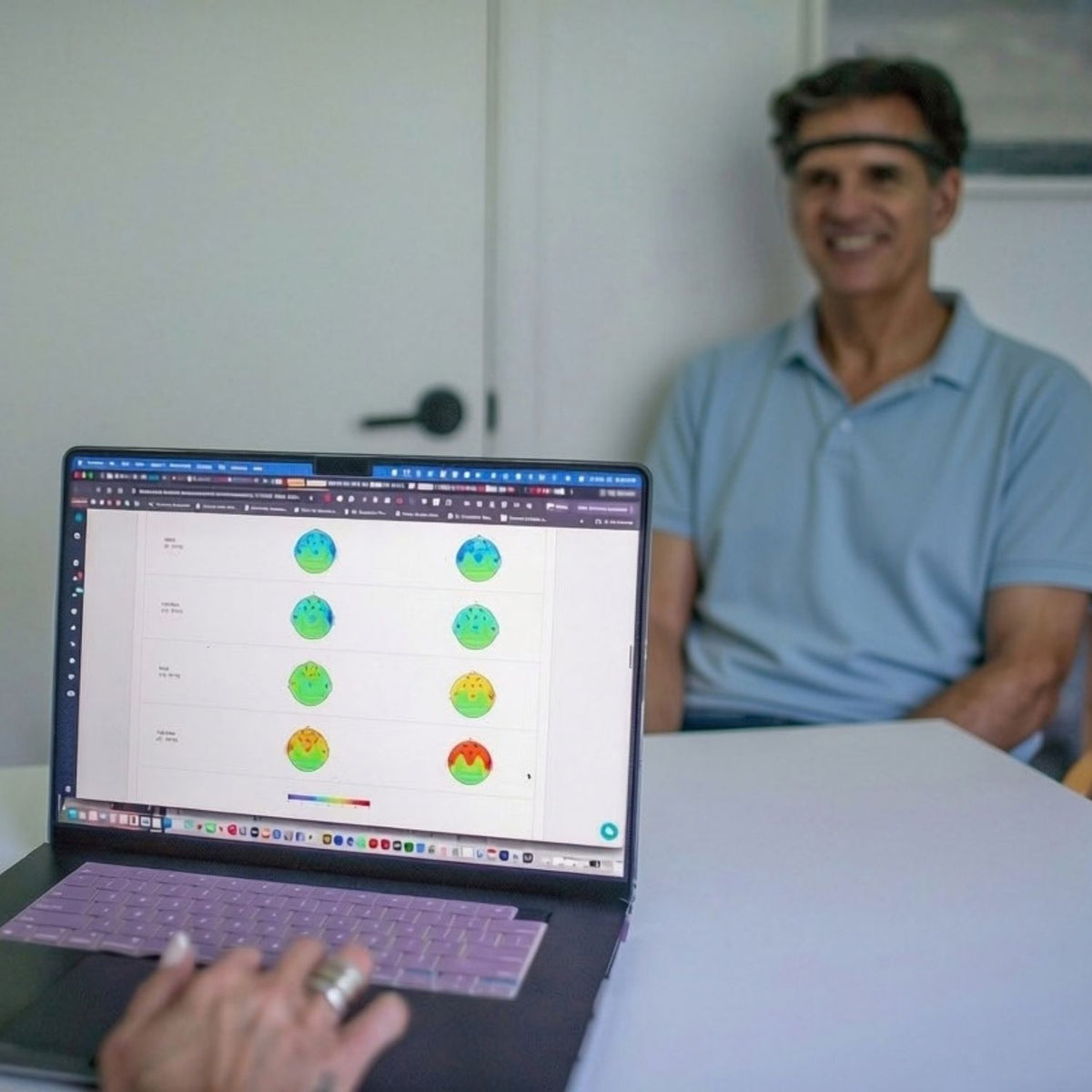

A 60 or 30 minute appointment
Nervous system regulation appointment
For new clients, this is the initial consultation: we review your history, current concerns and goals, find the best place to begin, and build a personalized plan to regulate your nervous system or improve cognitive performance. It does not include a brain map. For returning clients, the same appointment is used for follow-up visits. In person or virtual.
What neurofeedback may help with
Neurofeedback has been used in clinics for decades.
- ADHD
- Anxiety
- Depression
- PTSD
- Sleep disorders
- Chronic pain
- Concussion and traumatic brain injury
- Stroke
- Addiction and cravings
- Tinnitus
- Mild cognitive impairment and early-stage Alzheimer’s disease
- Early-stage Parkinson’s disease
Symptoms after long COVID or Lyme disease
- Fatigue that interferes with daily life, and symptoms that get worse after physical or mental effort
- Brain fog: difficulty thinking or concentrating, and memory problems
- Headaches
- Sleep problems
- Depression and anxiety
- Joint, muscle and body pain, and neck pain
- Dizziness and lightheadedness
- Pins-and-needles feelings
- Heart palpitations and chest pain
- Shortness of breath
- Changes in smell or taste
- Temperature sensitivity
Neurofeedback for brain injury rehabilitation
- Neurofeedback can also help with acquired brain injuries (ABI) or deterioration in brain function over time. These can be:
- Traumatic brain injuries (caused by a physical impact to the head)
- Non-traumatic brain injuries (for example strokes, ruptured brain aneurysm, chemical brain injury)
- Alzheimer’s and Parkinson’s diseases
- Neurofeedback cannot repair physical damage to the brain’s structure, but it can strengthen and help generate new neural pathways to restore brain function.
- It is also used to improve focus and cognitive performance, promote relaxation, reduce stress, and enhance overall wellbeing.
- Neurofeedback is brain training. It is not a diagnosis or a cure, and it works alongside your medical care.

Meet your Specialist
Dr. Julia Bitton, ND, BCN
Meet Dr. Julia Bitton, ND, BCN, leading Nervous System Regulation at Hamptons BioMed. A board-certified naturopathic doctor and board-certified neurofeedback clinician, she brings nearly two decades of clinical experience to helping clients regulate the nervous system and improve cognitive performance. She sees clients in person at our Southampton office and virtually by telehealth.
What Our Clients Are Saying about OUR Neurofeedback Offerings
Great, interesting, and insightful experience!!
Gerald N., Southampton
As always excellent. It’s wonderful what we are able to accomplish through Hamptons BioMed for our health!
Fern N., Southampton
have questions about Neurofeedback?
Neurofeedback Frequently Asked Questions
Yes. Neurofeedback is non-invasive; the sensors only read your brain’s activity, they don’t send anything into it. Some people notice mild, temporary effects like light fatigue or a slight headache in early sessions, which usually settle as training continues.
You sit comfortably wearing an EEG headband while you play a game, watch a video or listen to music. When your brain produces the target activity, the feedback rewards it: a sound becomes more pleasant, a game progresses, a video plays more smoothly.
Sessions last around 20 to 30 minutes, at least twice a week. Short, consistent training tends to matter more than occasional long sessions.
Many people complete 20 to 40 sessions, particularly for clinical or more complex concerns. Progress can vary based on your goals, how often you train, and your personalized protocol.
Most people begin noticing meaningful improvements within 3 to 6 weeks of consistent training, although the timeline varies depending on the individual.
A brain map shows the electrical activity in different regions of your brain. It is used to understand the strengths of your brain and where there is room for improvement, to personalize your training, and to monitor your progress.
Yes. Remote clients train at home with an EEG headband and the neurofeedback app, guided by Dr. Bitton by telehealth video call. Start with the Remote Neurofeedback Orientation; your device needs to arrive before your first consultation.
Yes. Children can train with neurofeedback. Minors are seen only with the supervision and consent of a parent or legal guardian.
No. Neurofeedback is brain training. It is not a diagnosis or a cure, and it works alongside your medical care. It should not be used as a substitute for medical treatment or therapy.
Yes. If you have a neurological condition such as epilepsy, traumatic brain injury, narcolepsy or migraines, share your medical history with Dr. Bitton before you begin, so your training program can be adjusted.
If you already know you want neurofeedback, book the Initial Neurofeedback Consultation + qEEG Brain Map. If you are not sure, book the 60-minute Nervous System Regulation Appointment, where we find the best place to begin.
have questions about Nervous system regulation?
Nervous System Regulation Frequently Asked Questions
Your autonomic nervous system has two branches. One works like a gas pedal: it puts your body on alert under stress. The other works like a brake: it relaxes your body afterward and supports rest and digestion. Nervous system regulation is the work of helping your body settle after stress instead of staying on alert.
Common experiences include ongoing stress or overwhelm, difficulty switching off, sleep that doesn’t restore, brain fog, mental fatigue, trouble focusing, and emotional reactivity. These are experiences, not a diagnosis.
A stress response that stays switched on takes a toll over time. Research suggests that 60% to 80% of primary care visits may have a stress-related component, and chronic stress is linked to high blood pressure and to brain changes that may contribute to anxiety and depression. Sleep, energy and focus all depend on a nervous system that can return to calm.
The 60-minute Nervous System Regulation Appointment is your initial consultation. Dr. Bitton reviews your history, current concerns, goals and any lab results you bring, finds the best place to begin, and builds a personalized plan.
It depends on what your initial consultation finds: your goals, your challenges, and the best place for you to begin. Your plan can include:
- Neurofeedback
- Heart rate variability (HRV) training
- Breathwork and guided meditation
- Emotional Freedom Technique (EFT), also called tapping
- Auricular therapy
- Deeper work on the triggers behind your stress response
- Coaching, and personalized practices you continue at home
- A review of your lab results
That depends on what your initial consultation finds. It is the first step for every client: it shows where you are starting, what your goals and challenges are, and the best place to begin. Your plan, including the number of appointments, is built from there.
HRV is the slight change in the amount of time between your heartbeats. It reflects how well your body adapts to stress and recovers from it, which makes it a useful measure of progress.
Neurofeedback is one part of Nervous System Regulation. It trains your brain activity using EEG. Regulation work teaches you to recognize and shift your own stress state. Many clients do one, some do both.
No. A qEEG brain map is only needed when neurofeedback is part of your plan.
You are measured at the start and again at reassessment, using the same questionnaires, HRV, and your own goals, so the change is visible to you.
Yes. Nervous System Regulation Appointments are available in person at our Southampton office or by telehealth video call.
Yes. Your plan can include other Hamptons BioMed services that fit your goals.
No. Nervous system regulation is not a diagnosis or a cure, and it works alongside your medical care. Continue with your physician and your mental health provider.
Pairs Well With
Human Regenerator Jet
Supports a calmer, more balanced nervous system alongside neurofeedback.
Learn moreReady to Map your brain?
Begin with an Initial Consultation & qEEG Brain Map session with Julia Bitton at our Southampton location.